Kanjivaram or Banarasi Saree - Which Makes the Perfect Wedding Choice
- julia sparkel

- Nov 5, 2025
- 3 min read
When it comes to Indian weddings, one thing that never fails to shine, apart from the bride, is the saree. Whether it's a grand South Indian wedding or a royal North Indian celebration, sarees add elegance, grace and evergreen beauty. But there is always one big question most brides and families ask: Should you choose a Kanjivaram saree or a Banarasi saree for the big day? Both are traditionally luxurious and have their own stories woven into them. In this blog, we will explore them both and help you make the best fashion decision.
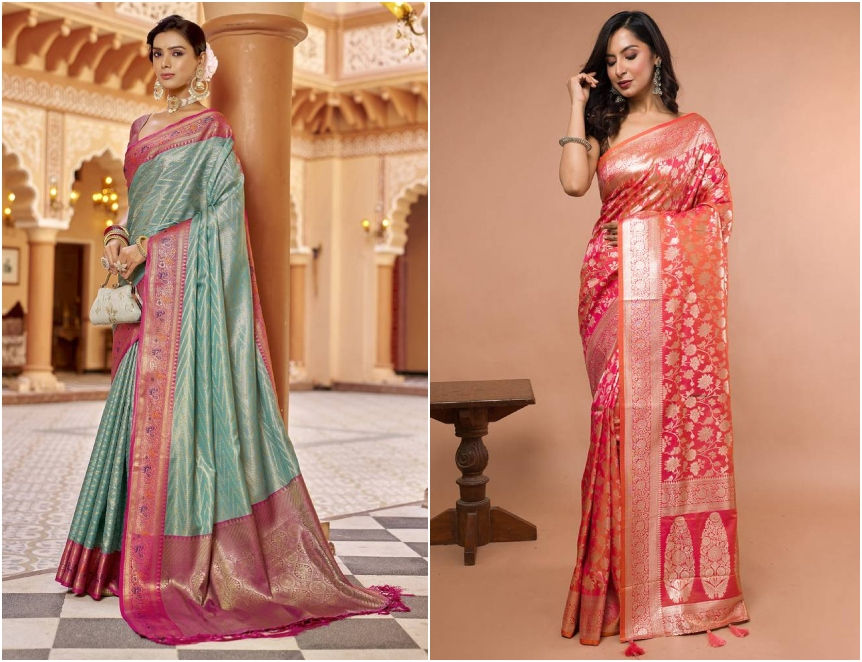
The Heritage Behind the 2 Icons
Kanjivaram sarees, also called Kanchipuram sarees, come from the temple town of Kanchipuram in Tamil Nadu. The sarees are woven with pure Mulberry silk and often feature rich borders and gold zari. They are known for their amazing durability, shine and bold colour combinations, making them a favourite in South Indian weddings.
On the other hand, Banarasi sarees hail from Varanasi, one of the oldest cities in India. The sarees are famous for their fine silk, delicate weaving and stunning Mughal-styled elements like flowers, leaves and small buttas. The craftsmanship behind a Banarasi sari often takes weeks or even months. Both styles represent centuries of tradition and are symbols of cultural pride. Wearing either of them is like truly wearing a piece of Indian history.
The Look and Feel
A Kanjivaram saree is often heavier with thick borders and bold contrasts like maroon with gold or royal blue with pink. The zari used in Kanjivaram is basically made with pure silver dipped in gold, giving it a rich and authentic shine. These sarees drape beautifully and hold their shape well, which is why they are perfect for long wedding ceremonies.
A Banarasi saree, in contrast, has a delicate feel. The fabric is light with detailed patterns spread across the body. The zari work is finer and more delicate, giving it a royal yet principal look. If you love elegant and detailed designs rather than just bold and grand looks, Banarasi sarees might be your best bet.
Perfect for the Bride
If you're a South Indian bride, chances are you have seen generations of women in your family wearing Kanjivaram sarees. The way the gold zari shimmers under temple lights or the morning sun is truly magical. Kanjivaram sarees are timeless and can easily become family heirlooms. But if you are a North Indian bride, the Banarasi saree might feel like second nature. It pairs really well with gold jewellery and delicate bridal hairstyles. Its soft drape and rich design create that royal bridal look that photographs really well.
That said, modern brides today love to mix tradition. It's no longer about sticking strictly to where you are from; it's all about expressing your personality. A lot of South Indian brides today choose Banarasi sarees for their reception, and North Indian brides choose kanjivaram for pre-wedding rituals.
Styling Tips for Each Indian Saree
For Kanjivaram Sarees
You can pair them with traditional jewellery or antique gold ornaments. Go for a neat bun with jasmine flowers for a classic bridal look. If your sari is rich in colour, go for subtle makeup; let your sari do the talking.
For Banarasi Saris
Style with kundan or polki jewellery for a royal touch. Soft waves and braided hairstyles complement the elegance. You can experiment with contrasting blouses, like a blue blouse with a gold saree, to modernise the look.
How to Choose Between Them?
If you are still unsure which traditional sarees you must choose, here is a quick guide. Choose a Kanjivaram saree if you want something grand, traditional and bold. It's perfect for temple weddings, morning ceremonies and brides who love vibrant colours.
You must choose a Banarasi saree if you prefer elegance, subtle shimmer and delicate patterns. It's great for evening functions, receptions or brides who want that classic royal look. You can also base your decision on the climate and comfort. Kanjivaram can feel heavier and warmer, while Banarasi is lighter and more breathable.
At the end of the day, whether you choose a Kanjivaram or a Banarasi, you are not just picking a saree; you're actually choosing a legacy. Both have stood the test of time, witnessed numerous weddings and adorned generations of women with pride.


Comments